





UAE
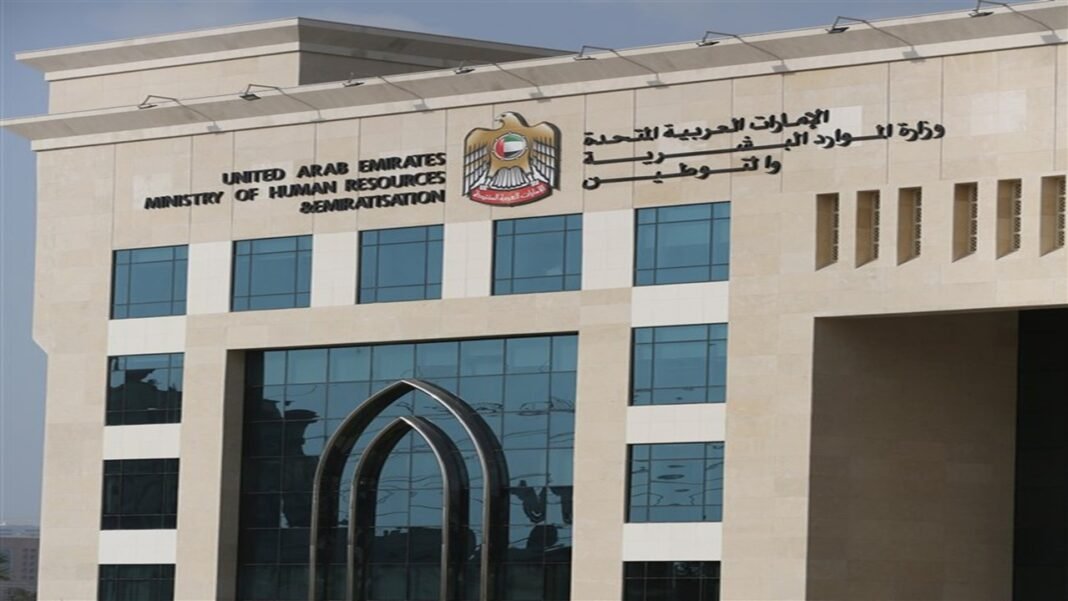
UAE Launches AI-Powered Labour Market Platform to Fast-Track Work Permits:In a major step toward building a future-ready economy, the Federal Authority forIdentity Citizenship Customs and Ports Security (ICP), in collaboration with the Ministry of Human Resources and Emiratisation (MOHRE), has unveiled an advanced artificial intelligence-driven initiative aimed at transforming the country’s labour market and work-permit system.

The project, which officially comes into effect from May 2026, is built on advanced AI, smart algorithms, and robotics technologies under a new government framework for autonomous “Agentic AI” systems. The broader framework was introduced by Mohammed bin Rashid Al Maktoum, Vice President and Prime Minister of the UAE and Ruler of Dubai, as part of the nation’s long-term strategy to become a global leader in AI-powered governance and economic innovation.

The initiative reflects the UAE’s response to rapidly evolving global labour market dynamics and aims to strengthen the country’s ability to attract highly skilled professionals and international talent. Authorities say the system will support the transition toward a more productive, diversified, and knowledge-based economy while improving labour market efficiency and transparency.
Under the new framework, every new work-permit application submitted from May 1, 2026, onward will be automatically evaluated through an “agentic AI and robotics” platform. The intelligent system will assess applications using multiple indicators, including professional skills, educational qualifications, work experience, licensing credentials, salary benchmarks, and industry demand data.
According to MOHRE officials, the AI platform cross-checks applicant information against a real-time database of national workforce needs and skills shortages, enabling straightforward applications to be approved within hours rather than weeks. Applications flagged for inconsistencies—such as credential mismatches or employer compliance concerns—will be escalated to human reviewers for further examination.
Government officials say the move positions the UAE as the first country globally to implement fully autonomous decision-making at a national scale for labour-market admissions.
The initiative is expected to particularly benefit sectors such as information technology, healthcare, advanced manufacturing, and other high-skilled industries where demand for global expertise continues to rise. Early adopters have reportedly received approvals in under 24 hours, highlighting the speed and efficiency of the new system.
In addition to AI-driven approvals, the programme also integrates robotics at Amer and Tas-heel service centres for automated document scanning and biometric processing. The UAE government believes this will accelerate its goal of creating a nearly 100 percent paperless immigration and labour ecosystem by 2027.
Officials emphasized that the new framework is part of a broader national vision focused on innovation, productivity, and economic competitiveness. By reducing administrative delays and improving data accuracy, the platform is expected to lower operational costs for businesses while creating a more transparent and streamlined recruitment environment.
While privacy advocates have called for additional safeguards under the UAE’s Personal Data Protection Law introduced in 2022, MOHRE stated that the AI algorithms are continuously audited to ensure fairness, transparency, and accuracy in decision-making.
Industry experts say the project further cements the UAE’s reputation as one of the world’s most forward-looking economies, leveraging artificial intelligence not only to modernize government operations but also to position itself as a premier destination for global talent and future industries.
Meanwhile, companies and mobility specialists are being advised to strengthen internal data quality processes, ensuring job descriptions, salary structures, and academic verification systems are fully aligned with the new AI-driven framework to avoid automatic rejections or processing delays.